

Accountability Before Reconnection
When a parent-child relationship has broken down, explanations alone rarely repair it. Accountability can create a path toward reconnection and rebuilding trust.
When a parent-child relationship has broken down, explanations alone rarely repair it. Accountability can create a path toward reconnection and rebuilding trust.

When a child refuses to see a parent, their resistance matters—but it shouldn’t make the child responsible for deciding what happens next.

Why Co-Parents Keep Having the Same Fight The argument changes. The pattern doesn’t. Last week it was the soccer schedule.

A difficult co-parenting relationship can turn small problems into recurring conflicts. The CALM Co-Parenting framework offers four practical ways to change the pattern: Be Curious & Empathic, Avoid Leaving Blanks, Lower the Temperature, and Make It Easier, Not Harder.

When co-parenting involves substance use or mental health concerns, focusing on labels can deepen conflict. A systemic approach shifts attention toward what the child and family need next.

High-conflict co-parenting doesn’t require perfection. Six practical shifts can help parents reduce conflict, improve communication, and create greater stability for their children.
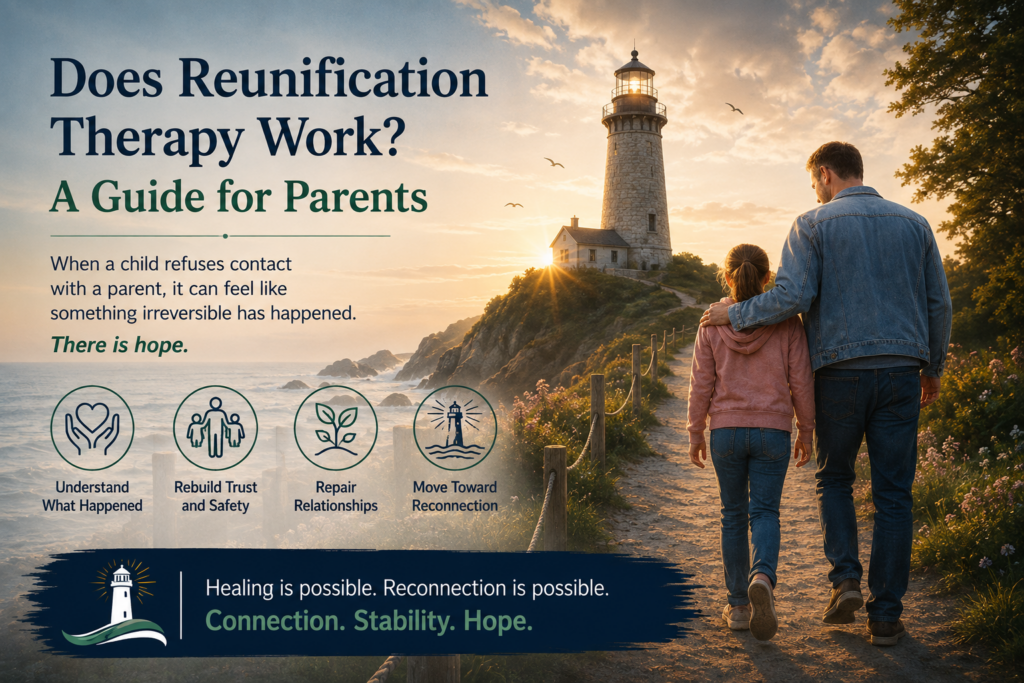
When a child refuses contact with a parent, the relationship can feel irreparably damaged. Reunification therapy can create a structured path toward understanding, repair, and reconnection.

Why do co-parents keep getting pulled into the same conflicts? Insights from neuroscience can help explain how expectations, feedback, and values shape the patterns we repeat.

Effective co-parenting involves more than managing schedules. How parents think, interpret, and communicate can either reinforce conflict or help create a more workable co-parenting relationship.

Co-parenting sometimes presents choices where every option seems wrong. Stepping outside the either/or dilemma can reveal possibilities that conflict makes difficult to see.